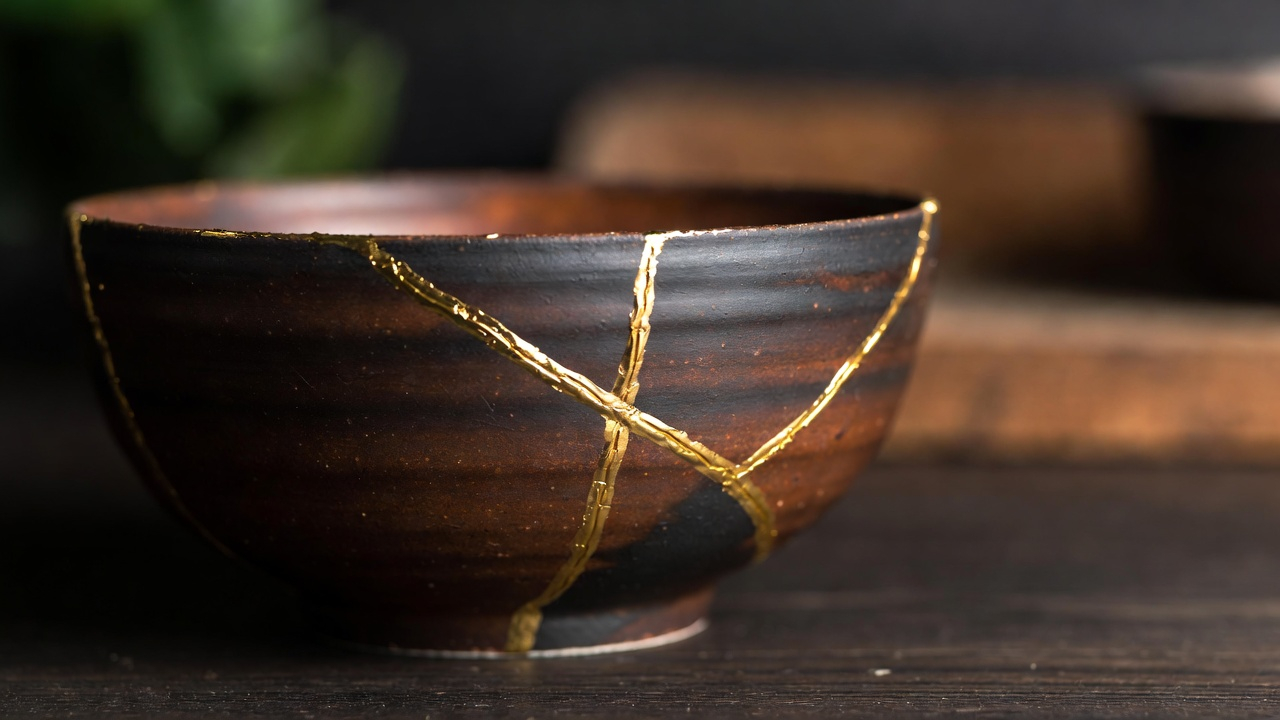

The world of 2026 is weary of plastic smiles and filtered success. In an era where artificial intelligence can generate “perfect” imagery at the click of a button, humanity has developed a profound hunger for authenticity. This is precisely why the ancient Japanese art of Kintsugi has transcended ceramic workshops to become the premier metaphor for resilience in modern psychology and corporate culture.
What is Kintsugi? From Broken Shards to a Life Philosophy
Kintsugi (literally “golden joinery”) is a Japanese technique for repairing broken pottery. Instead of discarding a shattered object or attempting to disguise the cracks, masters join the fragments using a lacquer mixed with powdered gold, silver, or platinum.
The result is breathtaking: the object is not merely whole again; it is more beautiful and durable than it was before the break. Its history—the story of its fall and its recovery—is now etched in radiant gold lines.
In 2026, this concept has become the foundation of a new psychological paradigm. It teaches us that our scars—whether physical, emotional, or professional—are not sources of shame. They are evidence of our endurance.
The Psychology of “Golden Scars”: Embracing Imperfection
For decades, “hustle culture” dictated an image of the invincible human. Every mistake was viewed as a fatal defect. However, Kintsugi offers a different path: Wabi-sabi, the finding of beauty in the imperfect and the transient.
Why Do We Fear the Cracks?
Most people spend a colossal amount of energy hiding their failures. We “retouch” our lives on social media, stay silent about burnout, and bury failed projects in the backyard of our resumes. But Kintsugi philosophy asserts that an object that has weathered a trial possesses greater value.
When we embrace our “cracks,” we become:
- Authentic. People are naturally drawn to those who aren’t afraid to be vulnerable.
- Resilient. Every crisis overcome is a layer of “golden lacquer” making our psyche more flexible.
- Unique. No two vessels break in the same way. Your trials create a pattern that cannot be copied.
Kintsugi in Business: The New Leadership Ethic
In 2026, the definition of a “successful business leader” has undergone a radical transformation. Authoritarian figures have been replaced by leaders practicing “Radical Candor.”
From Fail-Safe to Safe-to-Fail
Companies used to strive to be “fail-safe.” Today, progressive corporations build “safe-to-fail” cultures. Business leaders at global summits increasingly dedicate their keynote speeches not to growth charts, but to “f**k-up nights”—sharing cases where they lost millions, made strategic blunders, or faced personal collapse.
This is Kintsugi in action. When a CEO shares their “golden scar”—a failed startup that taught them to value their team—they bind the company culture together with the gold of trust.
The Benefits of “Human-Centric” Business:
- Reduced Fear: Employees stop fearing experimentation because they know a mistake is raw material for learning, not a death sentence.
- Customer Loyalty: Modern consumers buy from people, not logos. A brand that admits its mistakes and fixes them “the golden way” earns far more respect than one that hides behind PR statements.
How to Practice Kintsugi in Your Own Life
Transitioning to a Kintsugi mindset doesn’t happen overnight. It is a daily practice of reframing your experience.
- Analyze Your Shards. Recall an event that caused you pain or felt like a total collapse. What exactly did it break?
- Find the Golden Lacquer. What did you learn because of this experience? What qualities (patience, empathy, foresight) emerged after the healing process?
- Don’t Hide the Story. Start talking about your lessons openly. Your story of overcoming might just be the “repair manual” someone else is looking for.
The Economy of Good: Business That Heals
Kintsugi philosophy is tightly interwoven with the concept of the “Economy of Good.” This is a model where profit is not the ultimate goal, but a means to create positive social change.
Business becomes more human when it acknowledges its responsibility toward ecology and social equity. If a company makes a mistake (e.g., an environmental mishap), the Kintsugi approach isn’t about legal cover-ups; it’s about public admission and creating a project that compensates for the harm tenfold. This is creating a “golden legacy” on the site of a failure.
Conclusion
The art of Kintsugi teaches us the most vital lesson: To be broken is not to be destroyed. In 2026, this is not just psychological advice; it is a strategy for survival and growth.
Do not fear your cracks. It is through them that the light of your true personality shines. Remember, the most valuable ceramics in Japanese collections are those that were broken and masterfully restored. You are no different—after every trial, you become more expensive, more complex, and more beautiful.
Useful Links:https://en.wikipedia.org/wiki/Wabi-sabi
- Channeled message
- Co-Creation
- Complete Starseed Registry.
- Cosmic vibe
- Extraterrestrial Civilizations
- Gratitude
- Guides of Freedom and Transformation.
- Practice
- Quantum Consciousness
- Spiritual Awakening
- St. Germain
- Teachers, Healers, and Technologists.
- The Egyptian Pantheon of Gods
- The Progenitors and the Architects.
- TrendBeam
- Uncategorized