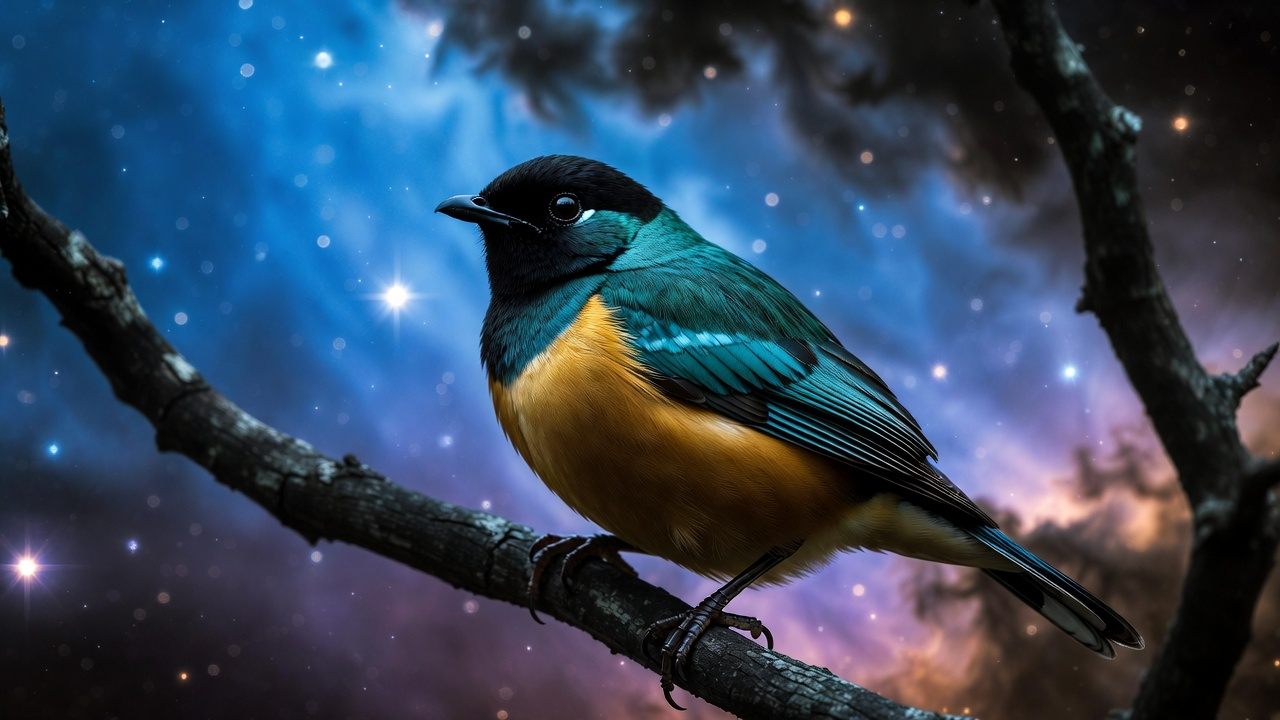

Imagine a world where, instead of gray asphalt and traffic jams, endless green tunnels stretch out before you. A world where, instead of the roar of engines, the air is filled with birdsong, and instead of exhaust fumes, there is the scent of a damp tropical forest. This is not a script for a science fiction movie about a future without humans. This is a reality presented to the world today, March 6, 2026, by ecologist Alcides Morales-Pérez. His project, poetically named the “Bullfinch Highway,” has become a true breakthrough in the field of rewilding and ecosystem restoration in the Caribbean basin.
The Problem of “Islands” Within an Island
Puerto Rico is a territory of incredible biodiversity, but over the last century, it has faced a critical problem: forest fragmentation. Urbanization, road construction, and agricultural expansion have torn what was once a unified forest massif into small, isolated “green islands.”
For many species, including the rare Lesser Antillean bullfinch and local species of bats, such isolation became a death sentence. Birds did not dare to fly across open spaces or highways, fearing predators and anthropogenic noise. The genetic pool of populations was depleted, and species gradually disappeared from entire regions.
This is where Alcides Morales-Pérez enters the scene. His idea was simultaneously simple and brilliant: if nature cannot come to us, we must build a road for it.
What is the “Bullfinch Highway”?
The Morales-Pérez project is a network of forest corridors stretching for hundreds of meters. These are not just trees planted in a row. They are carefully designed multi-tiered ecosystems. Every meter of such a “highway” takes into account the needs of the local fauna:
- Lower Tier: Dense shrubs that provide shelter for small reptiles and rodents.
- Middle Tier: Fruit-bearing trees that serve as “refueling stations” for birds.
- Upper Tier: Tall trees with spreading crowns that create a continuous shadow canopy, protecting the inhabitants of the corridor from the heat and the eyes of predatory birds.
These corridors have connected two large protected massifs that were previously separated by degraded lands and abandoned farms.
A Triumphant Return: Birds and Bats are Home Again
Today’s report by Alcides became a sensation in the scientific world. Using camera traps and acoustic monitoring, the return of species that had not been seen in these parts for over thirty years was recorded.
Particular attention was drawn to the Lesser Antillean bullfinch (Loxigilla noctis). This bird is critically important for the ecosystem because it disperses the seeds of many tree species, contributing to the natural restoration of the forest. Previously, bullfinches were blocked in the northern part of the reserve, but thanks to the “green highway,” they have mastered the southern territories in just a few months.
No less important is the return of bats. In Puerto Rico, bats play the role of primary pollinators of nocturnal flowers and natural controllers of insect populations. The restoration of their migration routes means the healing of the entire flora of the region.
Why Does This Matter to Each of Us?
The “Bullfinch Highway” project is not only about birds. It is a model of how humanity can coexist with nature in an era of climate change.
- Climate Resilience: Such corridors lower the air temperature in the region, fighting the “heat island” effect.
- Water Conservation: Forest strips retain moisture in the soil, preventing erosion and sudden floods during tropical storms.
- Psychological Well-being: It has been proven that the presence of green zones near settlements reduces stress levels in people and improves overall health.
The Secret of Success: Community and Science
Alcides Morales-Pérez emphasizes that the project would not have been possible without the participation of local residents. Most of the trees were planted by volunteers, and owners of private plots agreed to provide part of their land for the creation of corridors. This is an example of “citizen science,” where every resident becomes a guardian of their environment.
The ecologist used the “fast forest” method (analogous to the Miyawaki method), which allowed the plants to reach maturity twice as fast as under normal conditions. This is critically important for Puerto Rico, where every year of delay can lead to the irreversible loss of species.
The Future of Ecological Corridors in the World
The success in Puerto Rico is already inspiring other countries. Similar projects are planned in Colombia, Costa Rica, and even in the metropolises of Europe. The concept of “Green Infrastructure” is becoming a priority for governments that realize: concrete jungles must be pierced by living arteries.
Morales-Pérez plans to scale his project, creating a “Great Antillean Ring” that will connect all significant forest massifs of the island into one giant network.
Conclusion
Today’s news from Puerto Rico is a ray of hope. It proves that we have the power to correct the mistakes of the past. The “Bullfinch Highway” is more than just trees. It is a path toward reconciliation between man and the planet.
If we were able to build roads for cars that cross continents, then we can certainly build roads for life. And today’s success by Alcides Morales-Pérez is just the beginning of a great journey.
The project, implemented at the Hacienda La Esperanza reserve, has become a model for the entire Caribbean basin. Ecologist Alcides Morales-Pérez proved that even small forest corridors are capable of restoring migration paths for rare species.
Project Site (Hacienda La Esperanza): https://mascerca.paralanaturaleza.org/centros/hacienda-la-esperanza
- Channeled message
- Co-Creation
- Complete Starseed Registry.
- Cosmic vibe
- Extraterrestrial Civilizations
- Gratitude
- Guides of Freedom and Transformation.
- Practice
- Quantum Consciousness
- Spiritual Awakening
- St. Germain
- Teachers, Healers, and Technologists.
- The Egyptian Pantheon of Gods
- The Progenitors and the Architects.
- TrendBeam
- Uncategorized